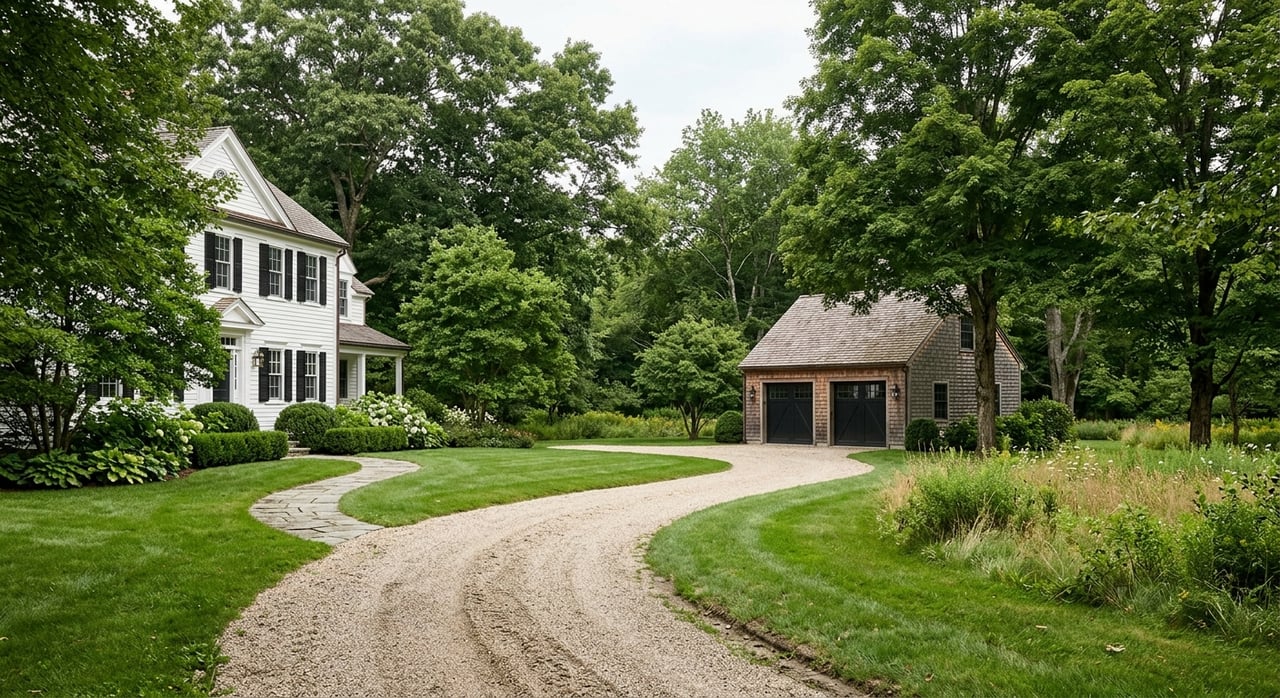
If you are thinking about buying in Hopewell Township, you are not just choosing a house. In many cases, you are also choosing a lot size, a utility setup, and a set of land conditions that can shape daily life and future plans. The good news is that Hopewell gives you real variety, and with the right due diligence, you can make a confident decision. Let’s dive in.
Why Hopewell feels different
Hopewell Township is a place where land plays a big role in the home search. The township covers about 58.91 square miles, and local planning documents describe a landscape shaped by rural character, farmland, the Sourland Mountains, and the Delaware River corridor.
A large share of the township is also preserved. Hopewell’s open-space plan reports 13,140.18 acres of open space and recreation land, or 35% of the township, and 16,400 acres, or 43%, when preserved farmland is included. That helps explain why buying here often feels less like a standard suburban search and more like a careful look at property setting, surroundings, and long-term use.
The ownership pattern also stands out. Census estimates show that 91.2% of Hopewell Township housing units are owner-occupied, with a median owner-occupied home value of $561,900. In practical terms, that points to a market where many owners stay put and where purchases often reflect longer-term goals.
What homes and lots you can expect
Hopewell is not one single type of market. You can find compact subdivision lots, larger-lot neighborhoods, and truly rural parcels, sometimes within the same broader area.
The township’s zoning schedule shows just how varied the lot patterns can be. Examples include R150 lots at 60,000 square feet, R100 conventional sewer-and-water lots at 20,000 square feet, R100 cluster lots at 7,000 square feet, R100 lots with wells and or septic at 80,000 square feet, R75 lots at 11,250 square feet, and R50 lots at 6,250 square feet.
The farmland preservation plan adds even more context. It describes density patterns ranging from about one dwelling per acre to one dwelling per 14 acres in lower-density zones. That means the answer to “how much land comes with a home in Hopewell?” can vary quite a bit.
Hopewell offers more than large detached homes
Hopewell often gets grouped into the “large-lot single-family” category, and that is certainly part of the picture. But it is not the whole picture.
The township’s R-5 district includes townhouses, duplexes, quadplexes, detached single-family homes, and age-55+ detached homes. So if you want lower-maintenance living or a different housing style, Hopewell may offer more options than you first expect.
This is one reason local guidance matters. A buyer looking for privacy on a larger parcel and a buyer hoping for a simpler townhome lifestyle may both find a fit here, but they will be looking at very different property types and due-diligence questions.
Utilities are parcel-specific
One of the most important things to know about buying in Hopewell is this: do not assume every property works the same way. Utility service is parcel-specific.
Hopewell Township lists several public water systems serving the Hopewell Valley, including Washington Crossing Estates, Hopewell Borough Water Department, Pennington Borough Water Department, NJ American, and Trenton Water Works. At the same time, the township notes that many public buildings in Hopewell Township are served by well water.
For buyers, that means you should confirm the actual setup for the specific property you are considering. A home may have public water, public sewer, private well, private septic, or some combination that differs from another property just a short distance away.
What to know about private wells
Private wells are a normal part of ownership in this area. They are not a red flag by themselves, but they do require clear documentation and testing.
In New Jersey, the Private Well Testing Act requires sellers or buyers of properties with potable wells to test untreated groundwater for up to 43 parameters. The New Jersey Department of Environmental Protection says both parties must review the results before closing.
Just as important, NJDEP explains that the law is meant to inform the transaction. A test result does not automatically stop a sale. Instead, it gives you factual information so you can understand conditions and decide how to proceed.
If a home has a private well, helpful questions include:
- When was the last PWTA-compliant test completed?
- Who collected the sample?
- What were the results?
- Is any water-treatment equipment already installed?
What to know about septic systems
Septic systems are also a normal ownership topic in Hopewell. If you are buying a property with septic, it helps to approach it as a standard part of property review rather than as a surprise.
Hopewell Township’s real estate transfer information states that a Letter of Review is required for any sale, rental, or change of use when onsite septic systems and or onsite well water quality are involved. If a property has public water or public sewer, those approvals are not required.
The township also says septic inspection and or well-water analysis must be submitted at least 10 business days before the change of occupancy. Septic inspections must follow NJDEP procedures through a third-party inspection firm.
NJDEP guidance also notes that homeowners should follow statewide standards and best management practices to reduce the risk of septic failures. For buyers, a recent inspection history and clear maintenance records can go a long way toward understanding the condition of the system.
Helpful septic questions include:
- When was the last third-party inspection?
- When was the last pump-out?
- Were any deficiencies identified?
- Are there maintenance records available?
Land conditions matter in Hopewell
In Hopewell, the land itself deserves as much attention as the house. Local planning documents identify limited groundwater, wetlands, steep slopes, and other sensitive natural resources as important factors.
That does not mean every property has a problem. It does mean that site conditions can affect where you build, how you expand, what permits you may need, and how you think about the property over time.
This is especially important if you are buying vacant land, planning a rebuild, or hoping to add significantly to an existing home. In those cases, early review of township health and planning requirements can save time and help you avoid costly assumptions.
Buying vacant land or planning new construction
If you are looking at land in Hopewell, or buying with plans to rebuild, you will want to be especially careful before closing. The township’s well-permit application for new construction shows that new wells require prior notification, an on-site inspector, and an engineer’s site plan showing existing wells and septic systems within 200 feet.
Final yield and potability testing are also required before approval. Those steps are a reminder that a beautiful parcel and a buildable parcel are not always the same thing.
This is where experienced local guidance can be especially valuable. A calm review of zoning, utility setup, land constraints, and township process can help you see the property as it is, not just as you hope it will be.
A practical buyer checklist for Hopewell
If you want to keep your process focused, start with confirmation. In Hopewell, a good due-diligence approach is usually about asking the right questions early.
Here is a simple checklist:
- Confirm whether the property has public water and sewer, private well and septic, or a mixed setup.
- Review any required well testing under the Private Well Testing Act.
- Ask for septic inspection and maintenance history, if applicable.
- Check whether the property is near preserved farmland, open space, or conservation land.
- Review whether lot conditions such as wetlands, slopes, or groundwater limits may affect your plans.
- For land, rebuilds, or major additions, ask what township health and planning documents may be required.
Why a steady approach matters
Hopewell rewards buyers who pay attention to details without becoming overwhelmed by them. The township and NJDEP both have established procedures for wells, septic systems, and transfer review, which helps create a clear framework for informed decisions.
That is often the best way to think about buying here. You are not looking for perfection. You are looking for the right fit, backed by facts, with a full understanding of the house, the land, and the systems that support it.
If you are considering Hopewell Township, a measured, local, and well-prepared approach can make all the difference. For thoughtful guidance on homes, land, and next steps in the Princeton-area market, connect with Heidi Hartmann.
FAQs
What makes buying a home in Hopewell Township different from buying in other nearby areas?
- Hopewell often involves more land-related questions, including lot size, zoning context, preserved open space, and whether a property uses public utilities or private well and septic systems.
What types of properties can you buy in Hopewell Township?
- Buyers can find a mix of compact subdivision lots, larger-lot homes, rural parcels, and some attached housing types such as townhouses, duplexes, and quadplexes in certain districts.
What should you check about utilities when buying in Hopewell Township?
- You should verify the specific property’s utility setup, including whether it has public water, public sewer, a private well, a private septic system, or a combination of services.
What is required for a private well when buying in Hopewell Township, New Jersey?
- For properties with potable wells, New Jersey’s Private Well Testing Act requires untreated groundwater testing for up to 43 parameters, and both parties review the results before closing.
What does Hopewell Township require for septic or well review during a sale?
- The township says a Letter of Review is required for sales, rentals, or changes of use involving onsite septic systems and or onsite well water quality, with required submissions at least 10 business days before the change of occupancy.
What should you know before buying land in Hopewell Township?
- You should review zoning, potential land constraints, utility requirements, and township health and planning documents, especially if you plan to build, rebuild, or make major additions.